Week 5: 5 Ways to Make Mobile Marketing Work for your Business

5 Mobile Marketing TipsIts Week 5 of the Digital Marketing Course.  The huge rise of mobile smartphones and tablets has rapidly changed how we reach our audience.  Here are five ways you can use Mobile marketing to work for your business.

No 1.  Location based offers

Proximity based coupons and offers works with digital signage in the stores with brands pushing offers to mobiles that are bluetooth enabled.  Cadbury’s and Coca Cola use this technique in convenience stores where they connect with customers in real-time when they are close to the point of purchase. Over time they can reconnect with consumers  with more targeted messages based on their actions and preferences.  O2 media offer this service in Ireland by setting up Geo Fences™  around locations, stores and venues.  When the customer enters this area they can opt to receive targeted offers and coupons for products they are loyal to.location_based_mobile_ad
No 2.  Mobile Search

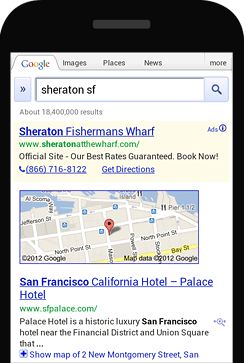
Mobile search differs from desktop searches because its immediate, local, social and always on.  Mobile searches also offer different options than desktop such as direct dialling to the phone number provided.  Targeting paid search ads is considerably cheaper than desktop as there are higher click-through rates with mobile users and their intent is more immediate.  Fewer competitors and on-page dominance are other factors that make paid search advertising attractive to local businesses.

No 3.  Mobile Optimised Sites

Creating a mobile site that allows users to carry out tasks in as few clicks as possible increases the interaction and engagement with your customer.  Research shows that after three clicks a user moves to another site if they cannot get to the information they require.  Domino Pizza saw an increase in pizza delivery orders when they converted their site to mobile use.  With geo location they made it possible to order pizza to a particular location and not just an address.Dominos_Mobile-vs-Standard

No 4. QR Codes

Quick Response codes can be read by a mobile phone to send the user to a destination where they can redeem vouchers, shop online or enter a competition.  They are an easy way to access more detailed information on the go.  They are particularly strong when used at POS or outdoor poster locations.  QR codes can also be used for ‘scan to call’ or download business card details.qr_code

No 5. Apps

ABI Research (March 2013) predicts: 56 billion smart phone apps will be downloaded in 2013 globally.  Apps can be divided into three core categories, utility, entertainment and e-commerce. The three most popular ways of hearing about an app are from friends, the App store and the App charts.  Well thought out and designed apps can offer your customer a faster, easier way to interact with your services or product on the go.

Ownership of mobile smartphones will continue to increase and their use will deepen as more functions are added.   Mobile marketing now requires to be integrated into your marketing strategy rather than being seen as an add-on to marketing activity.

Week 6 will be on Search Engine Optimisation.  The students have a  mid-term break next week so we’ll be back the week after then with our next session.
Week 4: How to use Social Media for Your Business

Social MediaIrish people are heavy users of social media platforms.  Facebook, Twitter, Linkedin and Youtube are the most widely used places where people connect and share.  Pinterest, Instagram and more recently Snapchat are growing in use and while these are the most popular there are many more.  So while your customers are posting, uploading photos, sharing with their family and friends how do businesses make sense of the Social Media space and how do they use it?    Begin with listening to your target audience.  Join groups and follow influencers in your sector.  Media monitoring tools such as Google alerts and Hootsuite are free and really useful.   Listen to conversations, articles, blogs and videos in your market.  Use the search function on Facebook, Twitter and Linkedin and start connecting with your customers by following or commenting on discussions they are in.

Business ObjectivesSet out clear and defined business objectives.  You will use different Social Media platforms depending on the outcome you want to achieve.  For example,  Twitter is really good at customer service.  Zappos, an online retail company, create a Twitter stream on their website to respond in realtime to customers’ questions and comments.  A bakery in Australia uses Twitter to let their local customers know when a fresh batch of bread has come out of the oven.  Create  awareness, increase engagement and build relationships are objectives that can be achieved through developing a social media plan.

Consider what message is appropriate for the Social media platform you are on.  Remember that this environment is social and not a place to make a sales pitch.  Look to add value for your customers and encourage sharing.  Murphy’s Ice cream set up a cute swinging chair in their shops where customers  could take photos eating their ice creams to post on Facebook.

Spend TimeSpend time every day connecting, creating, responding.  Most of the social media tools are free so for very little investment you can create awareness and an audience for your business.  The investment here is time.  Be diligent and focused on spending time every day to post content, respond to comments, share videos and stay active on all your platforms.  Use Google analytics and Social Media insights to see what’s working and what’s not.  Be flexible and modify your strategies and message to your customers as you learn what appeals to them.

Join us next week when we will be looking at mobile marketing.

Week 3: Who are you talking to and where are they?

UncleSamIts Week 3 of our course and a fundamental piece of work that is required in digital marketing is to identify who your customers are and where they are online.  At first glance it seems a daunting task.  The traditional method of segmenting a target audience into primary and secondary target audiences still applies.   In addition it is essential that you get data that informs you where they are online, how they use social media platforms, view media and use mobile devices

MT-Ultima-Family-Group-150x150You can begin your search online with sites such as Comscore, IAB. Amarach and Comreg.  These sites publish research on Irish consumers and their internet usage.   Setting up online surveys and polls is another way to get this information.  Of course nothing beats picking up the phone or having a discussion with your existing customers to ask them:   how they watch their favourite TV programmes, how they share with their friends and what they are doing differently with new technology.  With this information you can produce a profile of your different target audience segments.  This is best done by creating a ‘personna’  for each segment.  Create a storyboard that sets out in pictures who your customer is.

AudienceProfile

This will clearly show what age they are, what type of clothes they wear, what music they listen to, what books they read, who are their favourite celebrities and influencers.  What sports they play and follow, what car they drive and holidays they go on. Include what technology they use, how they use mobile phones and tablets, what websites they visit, what they search for online and how they use mobile when shopping. In addition to a storyboard, Hubspot, an American online marketing company have developed a great template for doing this work. Buyer Persona Template .  Use this template to see how you would describe your customer.  It will help you to answer how they interact online and how your product or service can help them.

Matching your customers’ needs with your company’s products and services requires curiosity, determination and a willingness to go the extra mile.  Spend time seeking this information out.

On week 4 we will be looking at Social Media and how large and small companies are using these platforms.